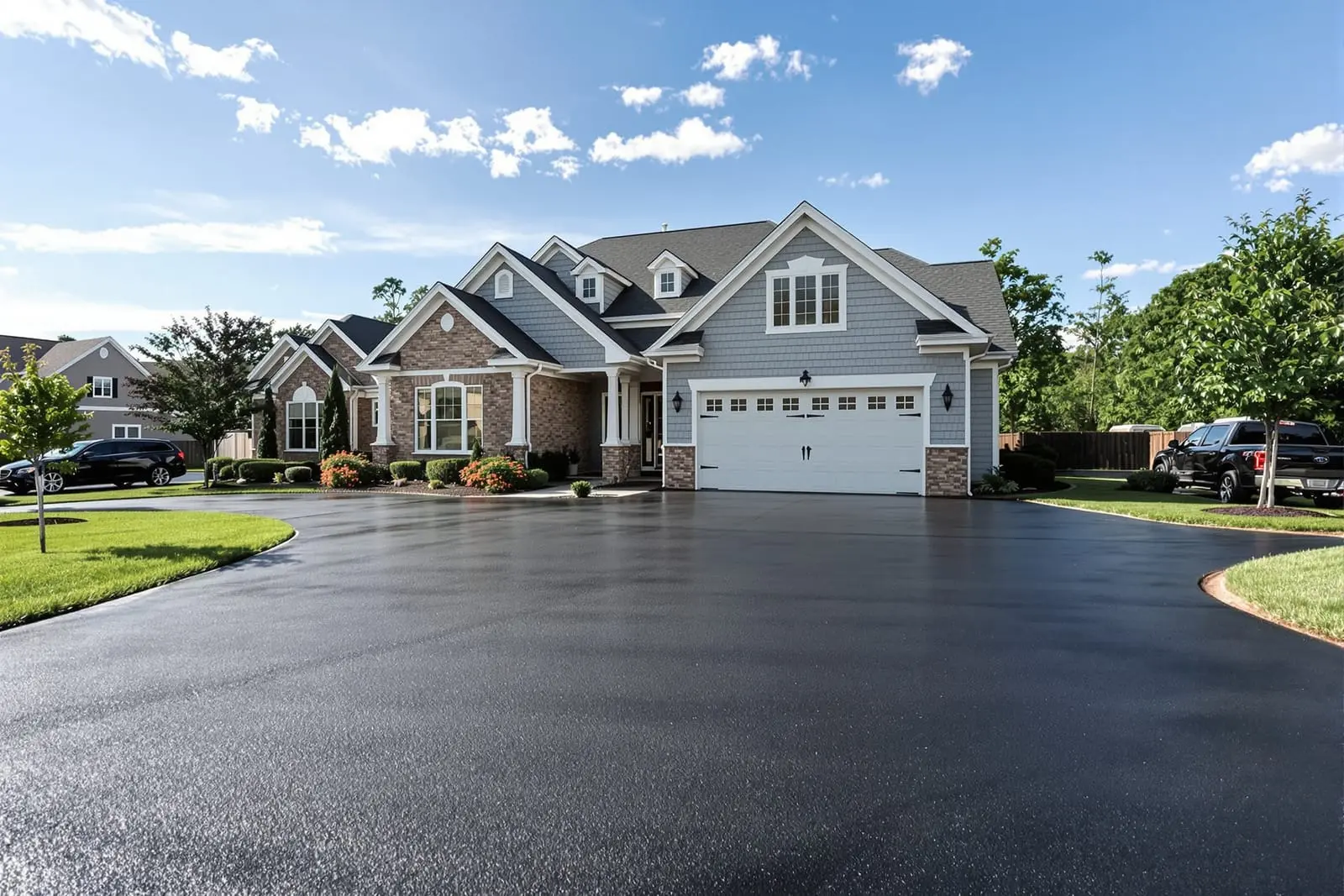
Extend the life of your existing driveway with asphalt resurfacing in Tucson, AZ. Overlays provide a fresh, smooth layer over a structurally sound base. Our crew repairs defects, applies tack coat, and paves a uniform overlay. Improve curb appeal and performance without the cost of full replacement.
Prestige Asphalt Tucson provides professional asphalt resurfacing throughout Tucson, AZ and the surrounding area. Our licensed, insured crew delivers safe, clean, on-time work with a free estimate before anything begins. Call (520) 462-7505 or request your free quote.
Asphalt Resurfacing & Overlays in Tucson, Done Right
Asphalt resurfacing is often the most cost-effective way to restore a worn parking lot, driveway, or private road in Tucson without paying for full reconstruction. Prestige Asphalt Tucson focuses on resurfacing and overlay work that fits our climate, soil conditions, and traffic patterns, so you get more life out of the pavement you already have.
On this service, we keep the existing base layer and replace only the top lifts of asphalt that have cracked, rutted, or oxidized. The key question is whether your current pavement is a good candidate. If the base is stable and there are no widespread structural failures, a resurfacing or overlay can give you a new driving surface at a fraction of full replacement cost.
In Southern Arizona, sun and heat are usually more damaging than freeze cycles, so many Tucson properties qualify for resurfacing even when the surface looks rough. Our job is to separate cosmetic damage from structural damage and recommend the right approach, not the most expensive one.
How We Evaluate Your Pavement Before Recommending Resurfacing
Prestige Asphalt Tucson starts every resurfacing job with a site visit. We walk the area, probe the surface, and document the types of distress you have alligator cracking, rutting, raveling, depressions, or drainage issues. We also ask about your traffic: delivery truck routes, trash collection paths, RV parking, or regular heavy equipment use.
We then run a few simple tests. In many cases we core or saw-cut a small area to see how thick your existing asphalt is and what the base material looks like below it. If the base is soft, saturated, or pumping fines, a simple overlay will fail quickly. If we can drive a screwdriver or rod into the base easily, you likely need spot base repairs before any resurfacing.
Drainage is a major factor in Tucson as well. During monsoon storms, water finds weak spots in the pavement fast. We check slopes and where water currently ponds after a rain. If we resurface over areas with standing water, the new overlay will crack early. Correcting ponding and poor flow often means milling specific locations, adding leveling course, or adding valley gutters or swales before we place the new asphalt.
Step by Step: Our Asphalt Resurfacing & Overlay Process
Once we confirm resurfacing is appropriate, Prestige Asphalt Tucson follows a defined sequence so the new layer bonds and performs as it should.
1) Surface cleaning and prep: We start by power sweeping and, if needed, pressure washing to remove loose aggregate, dirt, and oil. Areas with oil spills get treated with a special primer so the new asphalt will adhere.
2) Milling or edge transitions: To avoid creating trip points or steep transitions at garages, manholes, and public streets, we use a milling machine to grind down the existing asphalt at tie-in points. On some lots, we will mill the entire surface to a set depth to correct profile or remove a cracked top lift.
3) Base and patch repairs: Any areas with fatigue cracking (alligator) or sagging are cut out. We remove bad base material, compact new aggregate in lifts, then install full-depth asphalt patches. Doing this work before the overlay keeps those problem spots from reflecting through the new surface.
4) Leveling course: Where the existing pavement is wavy or has birdbaths, we install a thin leveling course of hot mix asphalt and machine grade it. This allows us to restore proper slope toward drains so water actually leaves the pavement instead of sitting on it.
5) Tack coat: Before placing the overlay, we spray an asphalt emulsion tack coat over the prepared surface. This bonding layer is critical in our hot desert climate, where movement from thermal expansion can shear off a poorly bonded overlay.
6) New asphalt overlay: We then install the new hot mix asphalt layer, usually between 1.5 and 2.5 inches for parking lots and driveways, and thicker for private roads or truck routes. We use mixes appropriate for Tucson heat, with the right gradation and binder content for resistance to rutting and raveling.
7) Compaction and finish: Using steel drum and pneumatic rollers, we compact the new asphalt while it is at the proper temperature. Correct rolling patterns give you a tight, dense surface that resists water penetration and future cracking.
8) Striping and markings: Once the asphalt has cooled and cured enough for paint, we reinstall parking stripes, ADA stalls, directional arrows, fire lanes, and any custom markings your property requires.
Local Considerations: Tucson Climate, Timing, and Mix Design
Resurfacing in Tucson is not the same as in cooler, wetter regions. Our biggest enemies are UV exposure, sustained high surface temperatures, and intense but short-lived rain during monsoon. Prestige Asphalt Tucson selects mixes and schedules work around these realities.
The best seasons for asphalt resurfacing here are typically late fall, winter, and early spring. Temperatures are still warm enough for proper compaction, but surface temperatures are lower, so the asphalt does not cool too fast or scuff as easily. In peak summer, we schedule work earlier in the morning or later in the day, and we adjust rolling patterns because the mat stays soft longer.
We also pay attention to binder type and content. For overlays in high sun exposure, we prefer mixes with good resistance to oxidation and rutting. Over time, cheap or poorly specified mixes become brittle and gray very quickly in Tucson. We will explain what mix we are proposing and why, including expected lifespan with your traffic.
Monsoon season means we build around the forecast. Fresh overlays cannot be rained on during compaction or while the tack coat is still curing. We allow extra time in the schedule and may phase the work on larger properties so that rain does not shut down your entire operation at once.
Costs, Options, and What Drives Your Price
There is no single price per square foot that fits every resurfacing project. Prestige Asphalt Tucson prices overlays based on actual conditions and project logistics, and we explain what is driving the number so you can make an informed decision.
Key cost factors include:
• Thickness of the overlay: A 1.5 inch overlay on a light duty residential driveway costs less than a 3 inch overlay on a private road that carries heavy trucks. Thicker sections mean more material and more compaction time but may be necessary for your use.
• Amount of milling and base repair: If your lot requires extensive milling to remove high spots or fix widespread alligator cracking, that adds labor, equipment time, and disposal. On some properties, correcting drainage and structural issues is more than half the job.
• Access and phasing: Working at a small home driveway is straightforward. A busy commercial center or HOA with limited access requires staging, off-hours paving, and traffic control, which affects cost. We can phase work so sections stay open, but each phase adds mobilizations.
• Striping and compliance items: Re-striping, adding ADA compliant stalls, and adjusting slope around ramps or walkways can be part of the resurfacing scope. If we need to bring layout closer to current codes, we will outline that in the proposal.
We also discuss options, such as whether to include a leveling course, whether to increase thickness in known truck lanes, or whether to combine resurfacing with crack sealing and sealcoating in adjacent areas. Our goal is a plan that matches your budget with realistic performance, not a one-size-fits-all package.
What Tucson Property Owners Should Know Before Hiring
Before you commit to asphalt resurfacing, it helps to understand what you are actually buying. Prestige Asphalt Tucson encourages you to ask any contractor specific questions.
Ask how they determined your lot was a good candidate for resurfacing rather than full reconstruction. You should hear a clear explanation about base condition, evidence from cores or test patches, and the type of cracking present. If a proposal skips this and only talks about square footage, be cautious.
Confirm the overlay thickness and the exact scope: areas to be milled, locations of base repairs, whether a leveling course is included, and how drainage issues will be addressed. Have them mark these areas on a site plan or sketch, not just in text.
Request specifics on the mix type and compaction approach. In Tucson, it matters whether they are using a hot mix suited to high temperatures and what the target density is. Ask how they will protect fresh asphalt from traffic and turn marks, especially in hot weather. We typically recommend light vehicle traffic after 24 hours and heavy or turning traffic after 48 to 72 hours, depending on conditions.
Finally, discuss timing and property impact. For commercial and HOA projects, we provide traffic control plans, phasing schedules, and clear instructions for residents or tenants. For homeowners, we coordinate around trash pickup, deliveries, and typical parking needs. Proper planning upfront is often the difference between a smooth project and a frustrating one.
If you want a detailed resurfacing assessment tailored to your property in Tucson, Prestige Asphalt Tucson can walk the site with you, point out specific issues, and present a written plan with options instead of a generic one-line quote.
“
Professional asphalt resurfacing & overlays, done right the first time, quality materials, honest pricing, and results that last.
Prestige Asphalt Tucson
Asphalt Resurfacing & Overlays Across Our Service Area