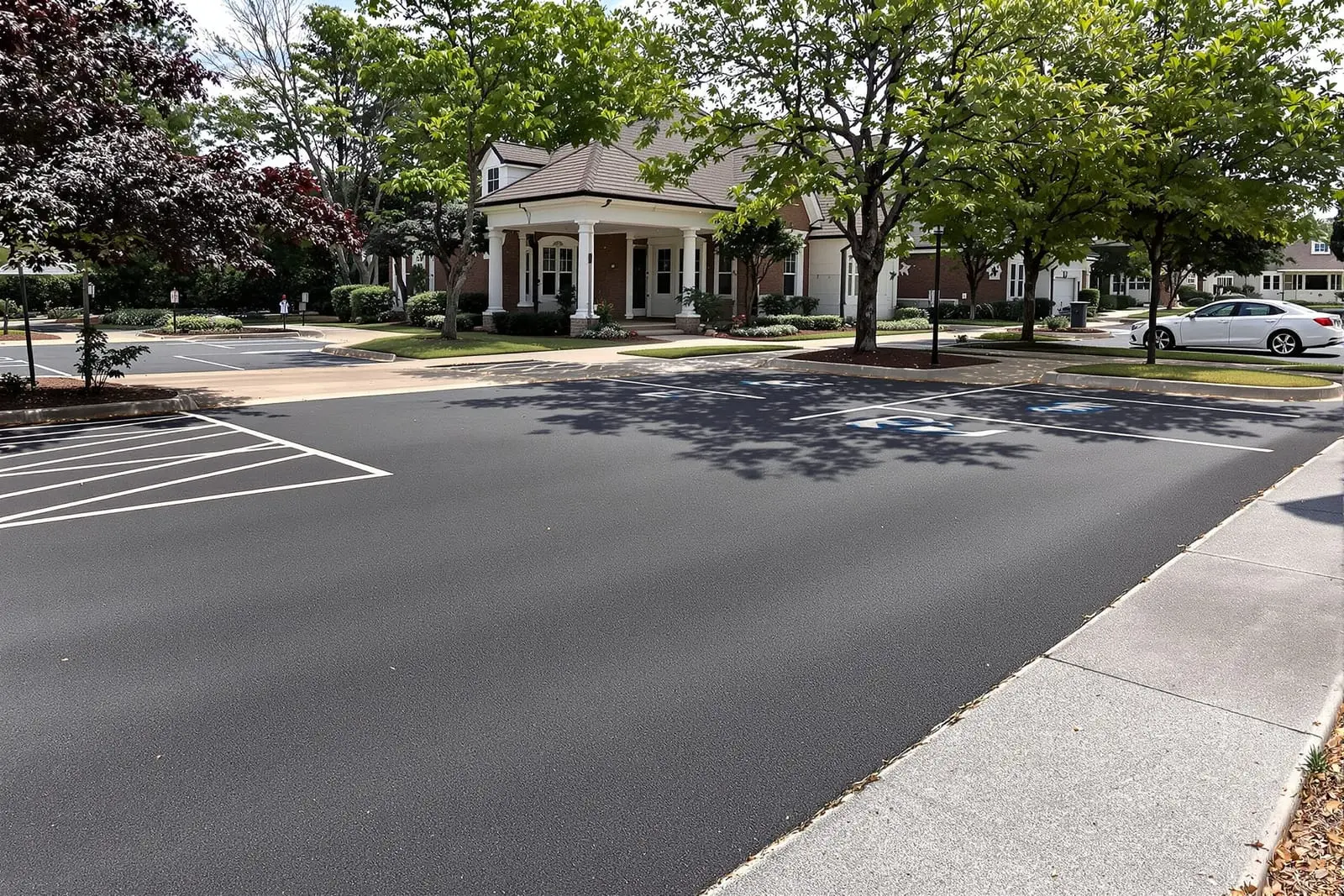
Our team handles parking lot repair in Tucson, AZ, from pothole patching to full depth replacement of failed areas. We identify underlying causes like drainage or base issues and correct them during repairs. When lots reach the end of their life, we provide complete tear out and repaving. Keep your property safe and professional with planned asphalt maintenance.
Prestige Asphalt Tucson provides professional parking lot repair throughout Tucson, AZ and the surrounding area. Our licensed, insured crew delivers safe, clean, on-time work with a free estimate before anything begins. Call (520) 462-7505 or request your free quote.
Parking Lot Repair in Tucson That Solves Problems Long Term
Prestige Asphalt Tucson focuses on one thing with parking lot repair: fixing the problems you see on the surface and the hidden issues underneath the asphalt. In Tucson, parking lots take a beating from intense sun, rapid temperature swings, and seasonal monsoon rains. That combination dries out asphalt, oxidizes the binder, then lets water into every crack. If repairs are done with the wrong material or at the wrong time of year, you end up paying to fix the same areas again and again.
When we inspect a lot, we look at more than the potholes. We check how the water drains across the pavement, where it is ponding after storms, and where the subgrade feels soft or pumping. We also evaluate the age and thickness of the existing asphalt, the condition of previous patches, and whether the base was properly compacted when the lot was first built. This tells us whether a basic repair is realistic or whether a partial or full replacement will actually be cheaper over the next 10 years.
Prestige Asphalt Tucson does not treat every crack or hole with the same product. Hairline thermal cracks from sun exposure, failed utility trench patches, and alligator cracking in drive lanes each need a different approach. Our goal is to match the repair method to the exact type of failure so you get a parking lot that holds together under Tucson heat and heavy traffic instead of a quick cosmetic fix.
Common Parking Lot Issues in Tucson and What They Mean
The same problems show up across Tucson parking lots, but the cause and the correct fix can be very different. Alligator cracking, where the surface looks like reptile skin, usually means the asphalt or base has failed structurally. A simple surface patch over that area will not last, you typically need milling and replacement of the weakened section.
Single, wide cracks that run in long lines can be from shrinkage or movement of the base material. Those are often good candidates for routing and hot rubber crack sealing, as long as the edges of the crack are still strong. Spiderweb or block cracking in low traffic areas often signals aged, oxidized asphalt. In those cases, extensive crack sealing combined with patching and then a new overlay might be the most cost effective option.
Potholes in Tucson tend to develop after monsoon rains exploit existing cracks. Water seeps through, softens the base, and traffic beats the weakened spot into a hole. If you see multiple potholes in a pattern, that often points to widespread base failure. Oil spots near spaces and drive aisles are another concern, especially at restaurants and busy retail centers. Petroleum products dissolve asphalt binder over time, which is why those areas often need full depth patching rather than a surface skim.
We also pay close attention to drainage problems, like birdbaths where water sits for days after a storm. Standing water accelerates cracking and potholing. Many older Tucson parking lots were paved to older standards or have settled unevenly, so part of the repair plan may involve minor regrading or adding new drainage features before we install replacement asphalt.
Our Parking Lot Repair Process Step by Step
Effective parking lot repair starts with a structured process, not just sending a crew with a load of mix. Prestige Asphalt Tucson follows a defined sequence so your repairs are durable and predictable.
First, we walk the entire lot with you. We mark out different failure types and note traffic patterns, delivery truck routes, dumpster access, and the busiest time periods you need to keep open. We also identify ADA routes and accessible spaces that must remain usable or be upgraded during the project. During this walk, we talk through any recurring problems you have seen, such as the same corner failing every year.
Next, we test suspect areas. For sections that look unstable, we may core or saw cut a small area to confirm asphalt and base thickness and moisture. This prevents surprise costs later and helps us decide between deep patching and full depth replacement.
Then we segment the lot into repair zones. Typical methods we might use include: hot rubber crack sealing after mechanical routing of larger cracks, saw cut and removal of failed patches or potholes followed by full depth asphalt replacement and compaction, skin patching for shallow surface defects where the base is still strong, structural overlays after milling off a set depth of the old surface, and base repair or stabilization in areas that pump or rut.
Compaction is where many repairs fail, especially in the desert. We use calibrated rollers and compact in proper lifts to reach target density so the new asphalt will resist rutting in high summer temperatures. We also ensure proper joint construction where new patches meet old pavement to prevent weak, crumbling edges.
When Repair Is Not Enough: Partial and Full Parking Lot Replacement
Sometimes the most cost effective approach is to stop patching and plan a strategic replacement. Prestige Asphalt Tucson helps you decide when that tipping point has been reached. If more than about 30 to 40 percent of your lot has structural failures or deep alligator cracking, continuing to patch every year can cost more over a five year period than a properly designed overlay or reconstruction.
For partial replacement, we may mill off the top 1.5 to 3 inches of asphalt across drive lanes or heavily damaged sections only, then repair any soft base we expose and install a new surface course. This improves smoothness, restores proper slope for drainage, and gives you a uniform look without rebuilding the entire property. For full replacement, we remove all existing asphalt, regrade and compact the base, then install new asphalt layers designed for your expected traffic and local soils.
In Tucson, soil conditions can vary from very hard caliche to loose, sandy fills imported during original construction. Where base conditions are questionable, we may recommend base stabilization or the use of specific aggregate base types that perform better in local conditions. For lots with frequent semi truck traffic, such as distribution centers or grocery stores, we can increase asphalt thickness or specify a higher performance mix to reduce rutting in extreme heat.
We also consider upcoming changes to your property. If you plan to add a drive through, expand a building, or increase loading operations, we design the replacement with those loads and traffic patterns in mind so you are not cutting into brand new pavement in a year or two.
Timing, Weather, and Seasonality for Tucson Parking Lot Work
Tucson weather allows a longer paving season than many markets, but timing still matters if you want a repair or replacement that cures correctly and lasts. Hot mix asphalt needs a certain temperature range in order to compact properly and bond to the underlying surface. During winter nights, temperatures can drop quickly, which changes how we schedule work and how we stage loads of material.
In the hottest months, asphalt can stay workable longer, but that same heat can be hard on existing oxidized lots. We often recommend tackling major structural repairs and replacements in spring or fall, when daytime temperatures are high enough for good compaction but not so extreme that traffic cannot return quickly. Crack sealing and minor patching can be done across a wider range of temperatures as long as we prepare the surface properly.
Monsoon season introduces another factor. Sudden storms can flood open cuts and wash fines out of the base if the site is not protected. Prestige Asphalt Tucson monitors forecasts closely and plans deep patching, milling, and open excavations when rain risk is lower. If we do get unexpected rain, we have protocols for pumping, drying, and re-compacting affected areas before we place new asphalt so moisture does not get trapped and weaken the repair.
We will discuss scheduling options with you to minimize disruption to your customers or tenants. That can include phasing the work so part of the lot always remains open, working off hours or weekends, and providing clear traffic control so people can safely navigate the site during construction.
Cost Drivers and Ways to Control Your Parking Lot Budget
Parking lot repair and replacement costs are influenced by a handful of key factors. Understanding these helps you compare proposals and avoid low bids that cut critical steps. The most significant drivers are the total square footage being treated, the depth of asphalt or base that must be removed and replaced, the number of mobilizations or phases required to keep your business open, and the mix design and thickness needed for your traffic loads.
For example, repairing isolated potholes in a lightly used office lot will cost far less per square foot than rebuilding truck lanes behind a supermarket. However, if your lot requires working in many small sections to avoid closing drive aisles, the cost per square foot will go up because the crew spends more time moving equipment and setting up traffic control.
Existing conditions also affect cost. Lots with extensive base failure, poor drainage, or substandard original construction usually require deeper patches or added base material. These are not extras or upsells, they are what keeps the new surface from failing again. Prestige Asphalt Tucson itemizes these differences clearly so you can see where your money is going.
To control your budget, we often phase work over two or three years, addressing the worst structural areas first and using targeted crack sealing and patching to stabilize the rest until your next budget cycle. We can also evaluate whether an overlay, combined with localized deep repairs, will meet your performance needs at a lower cost than full reconstruction. Our estimates are built around what is required for Tucson conditions, not a one size fits all template.
What to Ask Before You Hire a Parking Lot Contractor in Tucson
Choosing the right contractor is as important as choosing the right repair method. Before you commit to a parking lot repair or replacement, you should ask very specific questions. Ask how the contractor determined whether areas need deep patching versus surface patching and have them show you those locations on a site map. Ask what asphalt mix and thickness they are proposing in traffic lanes versus parking stalls.
You should also ask about compaction targets and what equipment they will use. A detailed proposal from Prestige Asphalt Tucson will list the number of asphalt lifts, approximate temperatures for placement, and the type of rollers we will use. If a proposal skips those details, you may be looking at a cosmetic overlay that will not hold up under Tucson sun and traffic.
Request references for similar properties in Tucson, such as medical centers, retail plazas, or industrial yards, not just residential driveways. Different uses create different stress on the pavement. Confirm how the contractor will handle traffic control, communication with tenants, and any striping or ADA upgrades required once the asphalt work is complete.
Finally, make sure you understand the warranty terms and what voids them. Proper maintenance, like periodic crack sealing and sealcoating, is often required to keep a warranty in force. When we complete a project, we provide a tailored maintenance schedule so you know exactly what to plan for in the coming years and can keep your new or repaired parking lot performing as expected.
“
Professional parking lot repair & replacement, done right the first time, quality materials, honest pricing, and results that last.
Prestige Asphalt Tucson
Parking Lot Repair & Replacement Across Our Service Area