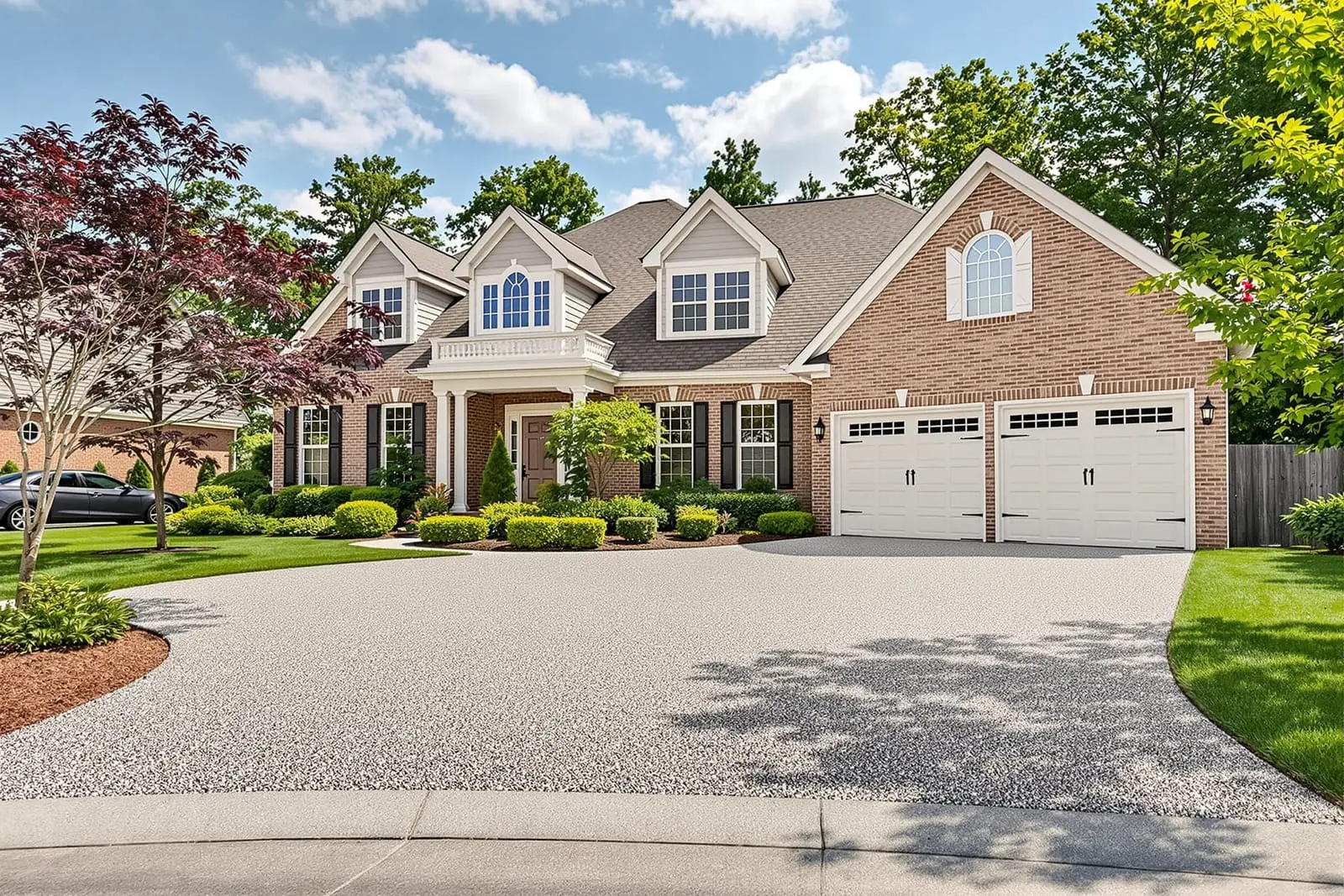
Our gravel to asphalt conversion services in Tucson, AZ turn dusty, rutted driveways into clean, solid pavement. We regrade and compact your existing base, add material if needed, then pave with quality asphalt. The result is a smoother ride, less dust, and easier maintenance. Improve access to your home with a professional upgrade.
Prestige Asphalt Tucson provides professional gravel to asphalt conversion throughout Tucson, AZ and the surrounding area. Our licensed, insured crew delivers safe, clean, on-time work with a free estimate before anything begins. Call (520) 462-7505 or request your free quote.
Turn Gravel Into a Clean, Solid Asphalt Surface
If you are tired of dust, ruts, and mud from your gravel driveway or parking area, a gravel to asphalt conversion can fix it for good. Prestige Asphalt Tucson specializes in turning loose rock into a smooth, durable asphalt surface that stands up to Southern Arizona heat.
A proper conversion is more than just paving over existing gravel. We look at how vehicles actually use your property, how water moves when it rains, and what the existing base looks like. For homes, that might mean a single-lane driveway with a small turnaround. For commercial lots, it might mean re-striping traffic lanes and ADA parking. Our focus is to give you a surface that drains correctly, does not rut under monsoon storms, and does not soften and crack in June and July when the pavement surface can reach 170°F.
Prestige Asphalt Tucson works across Tucson, Marana, Oro Valley, Vail, and Green Valley, and we know how the local caliche soils and sudden downpours affect paved surfaces. We match slope, base depth, and asphalt mix to these conditions so you get a conversion that lasts instead of a thin overlay that fails in a couple of years.
Our Gravel-to-Asphalt Conversion Process
Every property is different, but most gravel to asphalt conversions in Tucson follow a similar sequence. Skipping a step is usually why cheaper jobs fall apart early, so we explain the process up front.
1. Site evaluation and layout. We walk the area with you, measure width and length, look at how you enter and exit, and check where water currently flows. In older Tucson neighborhoods, we also watch for utility boxes and shallow irrigation lines that might be hiding under the gravel.
2. Existing gravel and subgrade inspection. We dig a few test spots to see how thick the gravel layer is and what is underneath it. If the gravel is clean and thick enough, it may become part of the new base. If it is full of fines or organic material, or if the subgrade is soft, we plan on scarifying, regrading, and compacting to build a stable foundation.
3. Grading and drainage shaping. Using a skid steer or motor grader, we cut and shape the area to create a gentle crown or slope (typically 2 percent) so water runs to the edges and into swales or drains. In Tucson, this step is critical because a single monsoon storm can drop an inch of rain in under an hour. Poor grading leads to standing water, which quickly breaks down asphalt.
4. Base preparation and compaction. We typically use an aggregate base that locks together under heavy compaction. In many residential driveways, we aim for 3 to 4 inches of compacted base, and more for commercial or heavy-vehicle areas. A vibratory roller is used to compact in multiple passes until we achieve a firm, uniform surface that does not shove under foot or tire.
5. Edge definition. For driveways that meet dirt or landscaping, we cut clean, straight edges in the base so the asphalt has a firm boundary. For areas that meet existing asphalt or concrete, we saw-cut to create a smooth tie-in so there is no abrupt bump.
6. Asphalt placement. We typically install 2 to 3 inches of hot mix asphalt for residential driveways, and thicker for truck traffic or commercial lots. The mix is brought from a local plant, placed with a paver or by carefully controlled handwork on smaller driveways, then compacted immediately with a steel drum roller to achieve a smooth, dense surface.
7. Finishing details and cleanup. For driveways, we finish transitions at the street so vehicles do not bottom out. For parking lots, we return after curing to stripe spaces, ADA stalls, and directional arrows. We clean up loose material and leave you with clear instructions on curing and initial use.
Design Choices That Affect Cost and Performance
The final price of a gravel to asphalt conversion in Tucson depends on more than square footage. Prestige Asphalt Tucson walks you through the trade-offs so you can decide what matters most for your property.
Base thickness and quality are usually the biggest cost drivers. A lightly used residential driveway on firm native soil may perform well with a 3 inch base. A long driveway on softer soils, or a small lot that sees delivery trucks, might need 4 to 6 inches. Cutting base thickness saves on cost up front but often leads to rutting and cracking, especially after a few monsoon seasons.
Asphalt thickness and mix type also affect both cost and durability. For most Tucson homes, 2.5 inches of compacted asphalt (installed in one lift) is a good balance between cost and strength. Commercial sites, dumpster pads, and drive lanes that see heavy delivery trucks are better served with 3 inches or more, sometimes in two lifts for better compaction. For high-heat conditions, we prefer mixes that resist shoving and softening, which is important on south-facing slopes and dark, unshaded areas.
Layout decisions can save money. Straight runs with minimal curves and no islands are faster to grade and pave than complex shapes around trees or planters. If you are on a budget, we may suggest paving a main drive lane and leaving secondary parking in gravel for now, with the option to convert more area later.
We also talk through edging options. Some clients want concrete curbing or ribbon edges to hold landscaping in place. Others prefer a simple compacted soil shoulder that blends into desert landscaping. Curbs and ribbons add cost but can help control erosion and keep rock off the new asphalt.
Finally, access issues affect price. Narrow gates, steep hillsides, or limited truck access in older Tucson neighborhoods can require smaller equipment and more labor, which we explain during the estimate so there are no surprises.
What Tucson Property Owners Should Know Before Converting
Timing, weather, and usage patterns matter for a successful gravel to asphalt conversion in our climate. Prestige Asphalt Tucson schedules most conversions outside the heart of monsoon season when possible, because heavy rain on freshly graded base can wash away fine material and create soft spots. If we do get caught by a storm, we recheck and recompact those areas before paving.
Asphalt actually installs well in warm weather as long as temperatures are not extreme and we can compact before the mix cools. In summer, we plan early morning starts both for crew safety and to keep the mix workable. Winter work in Tucson is usually fine too, but very cold mornings or high winds that cool the mat too quickly can be a problem, so we choose paving windows carefully.
You should also know how you plan to use the surface in the first few weeks. Fresh asphalt needs time to cool and begin curing. Light foot traffic is usually fine the same day once we finish rolling, but we normally recommend keeping vehicles off for at least 24 hours, and longer during peak summer heat. Tight turning, parking heavy trailers that do not move for weeks, or using kickstands directly on the surface can leave marks on new pavement.
Drainage is another key topic. If your current gravel area floods or channels water toward your home or building, that needs to be solved as part of the conversion. Paving a low area without improving drainage can actually make water problems worse, since asphalt is not permeable like loose gravel. We may propose swales, valley gutters, or slight re-routing of the drive to get water moving to a better outlet.
Permits and HOA rules sometimes come into play. Some Tucson-area subdivisions require specific driveway widths, colors for any concrete borders, or restrictions on tying into the street. We can help you read through those rules and adjust the design so you stay compliant while still getting a solid, functional surface.
Common Problems We Solve on Gravel-to-Asphalt Jobs
Converting gravel to asphalt often reveals issues that were hidden by loose rock. Prestige Asphalt Tucson plans for these and deals with them as part of the project or discusses options with you before extra work is done.
Soft spots in the subgrade are common near downspouts, low areas, or where vehicles have sat for years. When our crew finds a soft area that pumps or deflects under the roller, we dig it out, stabilize the subgrade, and rebuild with suitable base material. Leaving these spots in place usually leads to potholes within a year or two.
Dusty or contaminated gravel is another issue. If the existing gravel has broken down into fines, or if it is mixed with organic soil, it will not compact into a strong base. In those cases, we typically strip off the top layer, haul in fresh base, and compact in lifts. This adds cost, but it is cheaper than rebuilding a failed driveway.
We also run into elevation conflicts. For example, after proper base and asphalt thickness are added, the new surface may end up higher than garage slabs, gates, or existing sidewalks. Instead of guessing, we set string lines and laser levels before grading. If there is a conflict, options might include slightly lowering the existing gravel, adjusting the slope, or in some cases creating a short, gentle transition ramp.
Cracking in nearby existing asphalt or concrete is another warning sign we pay attention to. If a new asphalt area will tie into an old, failing section, we may recommend saw-cutting back to sound material or planning for that older section to be replaced in the future. This avoids reflective cracking where existing cracks transfer into the new pavement.
Throughout the process, our goal is to explain what we find and why we recommend certain fixes, using plain language and real numbers (depths, slopes, mix types) so you can make informed decisions about your gravel to asphalt conversion.
“
Professional gravel-to-asphalt conversions, done right the first time, quality materials, honest pricing, and results that last.
Prestige Asphalt Tucson
Gravel-to-Asphalt Conversions Across Our Service Area